Market Overview: EURUSD Forex
The weekly EURUSD bears want a breakout below the trading range followed by a measured move based on the height of the trading range. Bulls want a failed breakout below the trading range, followed by a bull leg to retest the top of the range.
EURUSD Forex market
The Weekly EURUSD chart
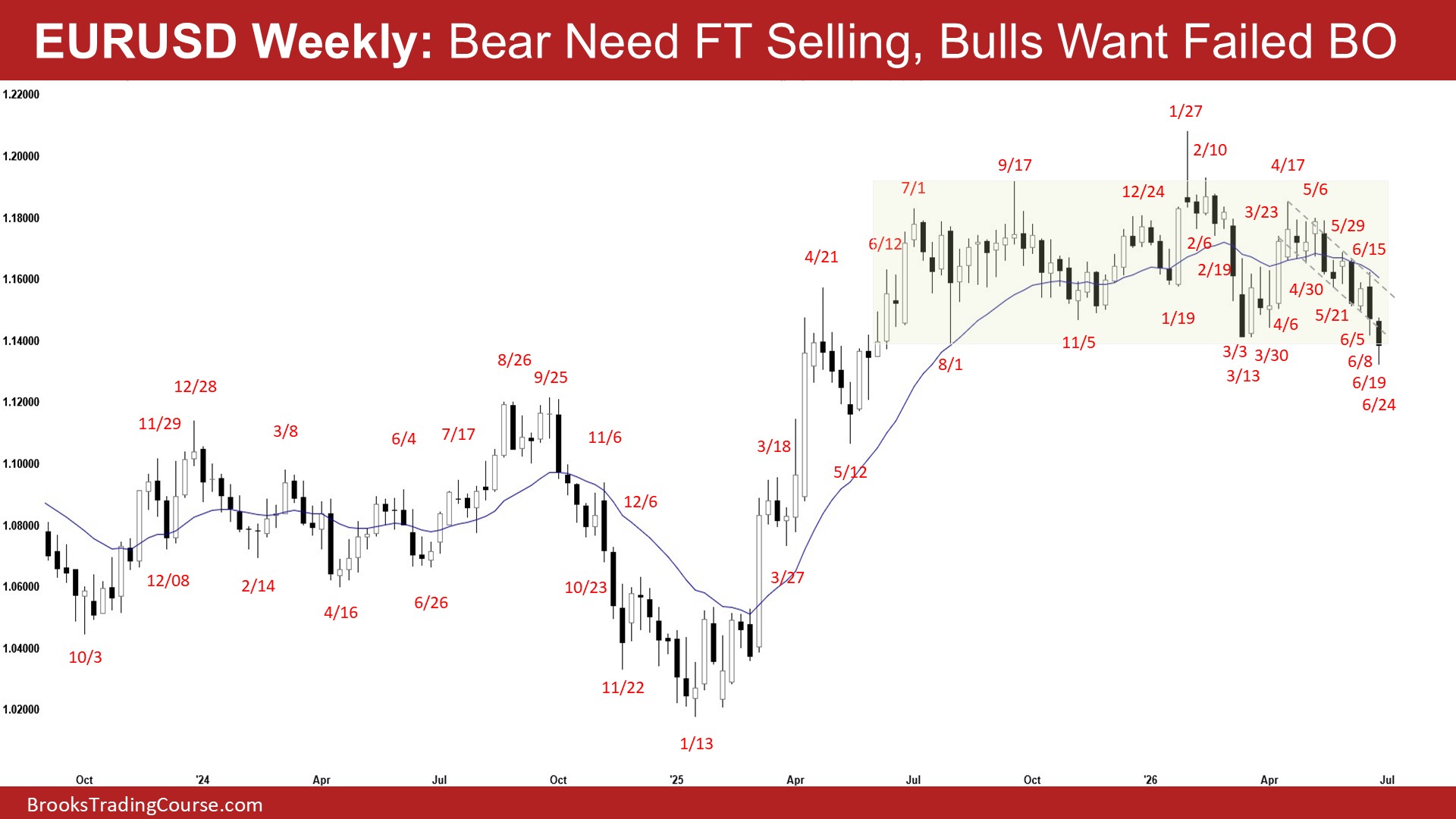
- This week formed a bear bar closing below the middle of its range, with a prominent tail below after breaking beneath the trading range.
- Last week, we said traders would watch whether bears could generate follow-through selling over the next several weeks and break below the March 13 low, or whether buyers would step in again near the bottom of the trading range.
- Bulls view the current move as a bear leg within the trading range forming a large wedge bull flag (Nov. 5, March 13, and June 24) and a trend channel line overshoot (June 24).
- Bulls want a failed breakout below the trading range, followed by a bull leg to retest the top of the range.
- If the market trades lower, bulls want the May 12 low to act as support.
- Bulls need consecutive strong bull bars breaking decisively above the 20-week EMA and the bear trend line to demonstrate control.
- Bears got a bear leg from a lower high major trend reversal (April 17), testing the bottom of the trading range.
- Bears want a reversal from a head and shoulders top (September 17, January 27, and April 17), followed by a measured move based on the height of the trading range.
- Bears need consecutive strong bear bars breaking decisively below the March 13 low, with follow-through selling, to increase the odds of reaching the measured move target.
- If the market trades higher, bears want the 20-week EMA or the June 15 high to act as resistance, forming a double top bear flag.
- The market broke below the bottom of the trading range, but the breakout bar had a prominent tail below.
- Markets have inertia and tend to continue doing what they have been doing. About 80% of breakout attempts fail.
- Traders will watch whether bears can generate follow-through selling over the next several weeks and break decisively below the March 13 low.
- Or will the market stall around the bottom of the trading range, followed by a pullback to retest the middle of the range in the weeks ahead?
- Until there is a clear breakout with strong follow-through, traders may continue to Buy Low, Sell High (BLSH), buying near the lower third and selling near the upper third of the range.
- The middle of the range is an area of balance and often acts as a magnet.
The Daily EURUSD chart
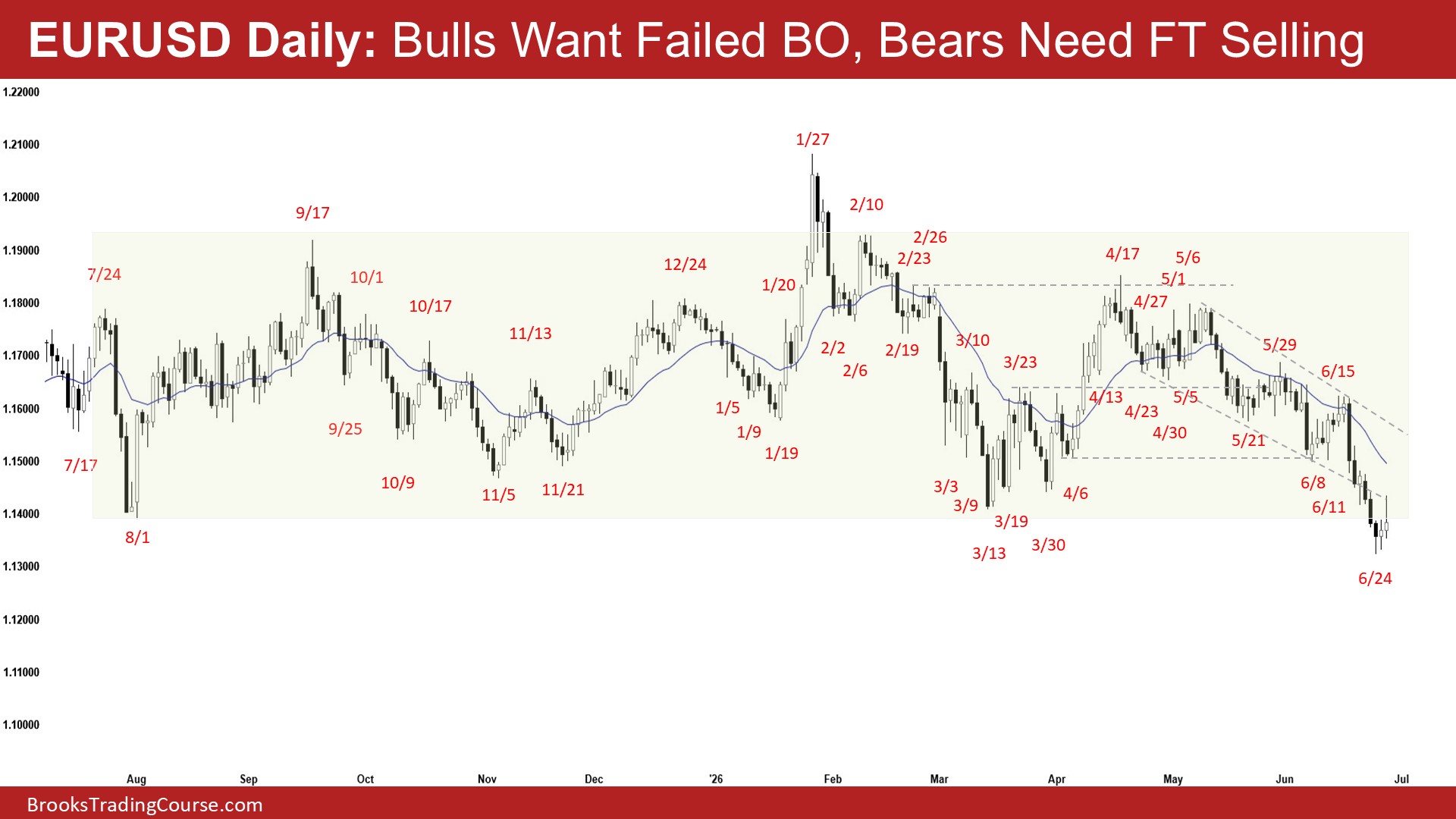
- EURUSD broke below the bottom of the trading range in the first half of the week, followed by a pullback on Friday.
- Last week, we said traders would watch whether bulls could create a strong bull entry bar early in the week with sustained buying, or whether bears could generate follow-through selling and break below the March 13 low instead.
- Bears created a bear leg, breaking slightly below the bottom of the trading range this week.
- Bears want a strong breakout followed by a measured move based on the height of the range.
- Bears see any pullback as a breakout pullback test of the breakout point (the bottom of the trading range).
- If the market trades higher, bears want the 20-day EMA or the June 15 high to act as resistance, followed by another strong leg down.
- Bears need consecutive bear bars closing near their lows breaking decisively below the trading range to increase the odds of a successful breakout.
- Bulls view the current move as a bear leg testing the bottom of the trading range.
- Bulls want a failed breakout, with the bottom of the trading range holding as support, followed by a bull leg to retest the top of the range.
- Bulls want a reversal from a large wedge bull flag (November 5, March 13, and June 24) and a trend channel line overshoot (June 24).
- Bulls need consecutive strong bull bars to demonstrate control.
- The market broke below the trading range and then pulled back on Friday.
- Traders will watch whether bulls can create a deeper pullback to test the 20-day EMA. If the move is weak and sideways, with overlapping candlesticks and prominent upper tails, the odds of another leg down will increase.
- Or will bears be able to generate strong follow-through selling below the trading range instead?
- Markets have inertia and tend to continue doing what they have been doing. Breakouts fail about 80% of the time.
- Until there is a strong breakout with sustained follow-through, traders may continue to Buy Low, Sell High (BLSH), buying near the lower third and selling near the upper third of the range.
- The middle of the range is an area of balance and often acts as a magnet.
Market analysis reports archive
You can access all weekend reports on the Market Analysis page.


