Market Overview: Crude Oil Futures
The market formed a weekly Crude Oil inside bar closing near its high. The bulls need to create a strong breakout above the November 7 high to increase the odds of a measured move up based on the height of the tight trading range. The bears want a retest of the October/September lows and the bottom of the triangle from a wedge bear flag (Nov 7, Nov 22, and Dec 16).
Crude oil futures
The Weekly crude oil chart

- This week’s candlestick on the weekly Crude Oil chart was an inside bull bar closing near its high and above the 20-week EMA.
- Last week, we said that traders would see if the bulls could create a breakout above the wedge bull flag (Oct 29, Nov 18, and Dec 6) and test the top of the triangle. Or if the market would continue to chop sideways and test the bottom of the tight trading range instead.
- The market continued to trade sideways and the bears could not create follow-through selling.
- The bears want a retest of the October/September lows and the bottom of the triangle from a wedge bear flag (Nov 7, Nov 22, and Dec 16).
- They want the top of the tight trading range or the 20-week EMA to act as resistance.
- If the market trades higher, they want a lower high and the top of the triangle to act as resistance.
- The bulls see the market forming a wedge bull flag (Oct 29, Nov 18, and Dec 6) and want a breakout to retest the top of the triangle.
- They need to create a strong breakout above the November 7 high to increase the odds of a measured move up based on the height of the tight trading range.
- The market remains in a tight trading range in the last 10 weeks.
- While we may see a breakout attempt soon (perhaps above the tight trading range first), until there is a breakout, there is no breakout.
- For now, traders will see if the bulls can create a breakout above the wedge bull flag (Oct 29, Nov 18, and Dec 6) and test the top of the triangle.
- Or will the market continue to chop sideways and test the bottom of the tight trading range instead?
- The market has been trading sideways with overlapping candlesticks, poor follow-through and frequent reversals which means the market is in a tight trading range.
- The tight trading range also indicates that the market is in breakout mode. Traders will wait for a strong breakout from either direction, with sustained follow-through buying or selling and trade in the direction of the breakout.
- The market is trading around the middle of the trading range which is an area of balance and a magnet.
- The lower third of the large trading range can be the buy zone of trading range traders.
- Traders will BLSH (Buy Low, Sell High) until there is a breakout from either direction with sustained follow-through buying/selling.
The Daily crude oil chart
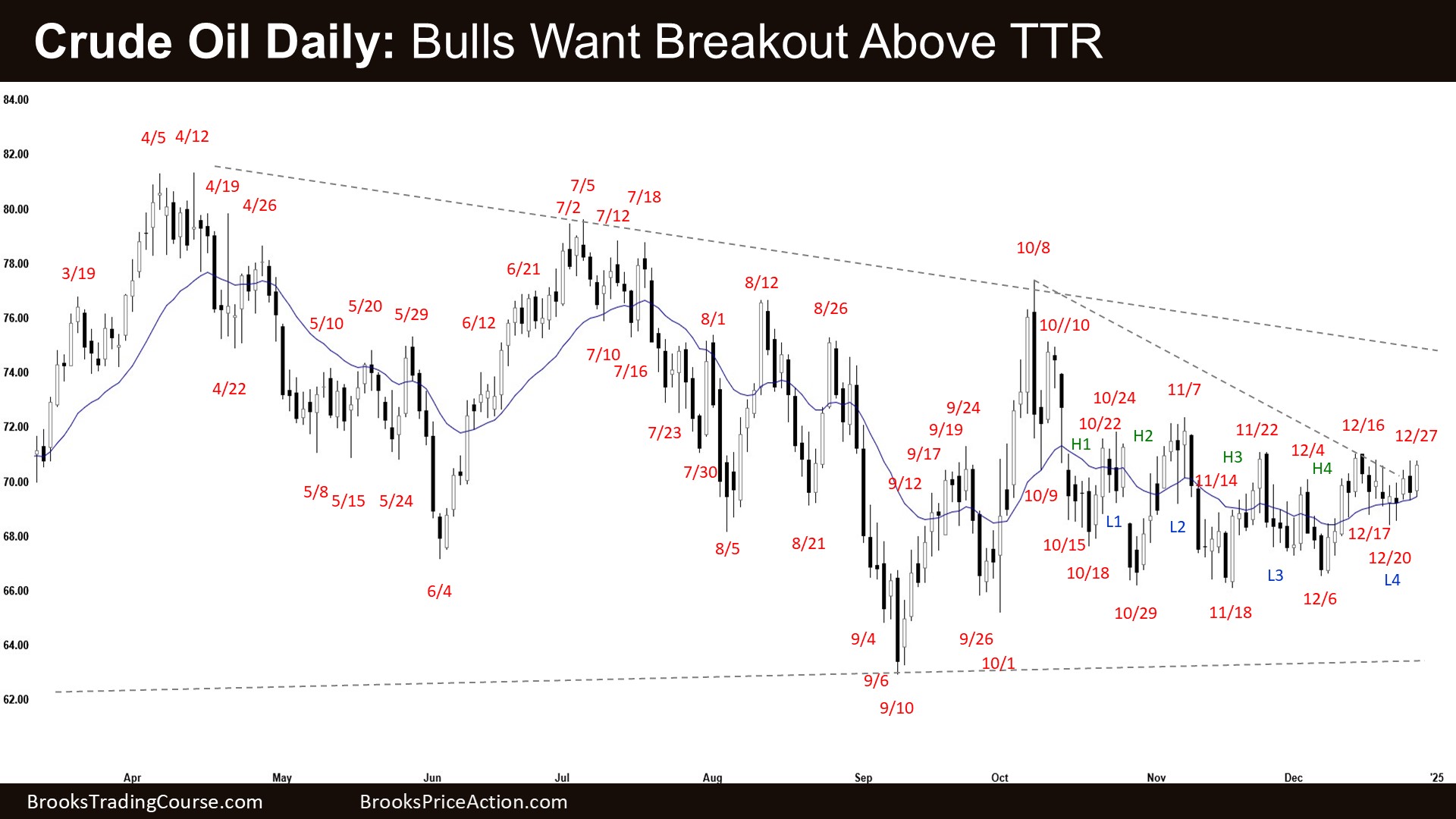
- The market traded sideways to up for the week above the 20-day EMA.
- Last week, we said that traders would see if the bulls could create a retest and a breakout above the tight trading range, or if the market would continue to chop sideways and test the bottom of the tight trading range instead.
- So far, the market is testing near the top of the tight trading range but there is no breakout yet.
- The bulls see the current move forming a wedge bull flag (Oct 19, Nov 18, and Dec 6).
- They want a breakout above the tight trading range to retest the top of the triangle and the October 8 high.
- They want a strong breakout followed by a measured move based on the height of the tight trading range.
- The bulls need to create a breakout with follow-through buying to show they are in control.
- The bears want a retest of the October and September lows followed by a breakout below the bottom of the triangle.
- They want the market to reverse lower from a larger Low 4 sell setup.
- They want the top of the tight trading range and the bear trend line to act as resistance.
- If the market trades higher, they want a lower high and the top of the triangle to act as resistance.
- So far, the candlesticks in the last 10 weeks have a lot of overlapping ranges which indicates tight trading range price action.
- Poor follow-through and reversals are hallmarks of a trading range.
- The buying pressure since the December 6 low appears slightly stronger (consecutive bull bars, larger bull bodies and closing near their highs) as compared with the selling pressure (bear bars with limited follow-through selling).
- For now, traders will see if the bulls can break above the tight trading range with follow-through buying.
- Or will the market continue to chop sideways and test the bottom of the tight trading range instead?
- Until there is a breakout, there is no breakout.
- The lower third of the large trading range can be the buy zone of trading range traders.
- The market is trading around the middle of the trading range which is an area of balance and a magnet.
- Traders will BLSH (Buy Low, Sell High) until there is a breakout from either direction with sustained follow-through buying/selling.
- The tight trading range also indicates that the market is in breakout mode. Traders will wait for a strong breakout from either direction with sustained follow-through buying or selling and trading in the direction of the breakout.
Market analysis reports archive
You can access all weekend reports on the Market Analysis page.


